

Is Hamnet Grief Porn?
The art-nature debate revived!?!

“Can a play show us the very truth and nature of love?” So asks Judy Dench, playing a steely Elizabeth I in the 1998 Shakespearean blockbuster Shakespeare in Love. If that cheesy but artful romance wondered whether art might capture love’s truth, the latest entry in the subgenre of films about how Shakespeare wrote X play, Chloé Zhao’s Hamnet, asks: can art show us the very truth and nature of grief?
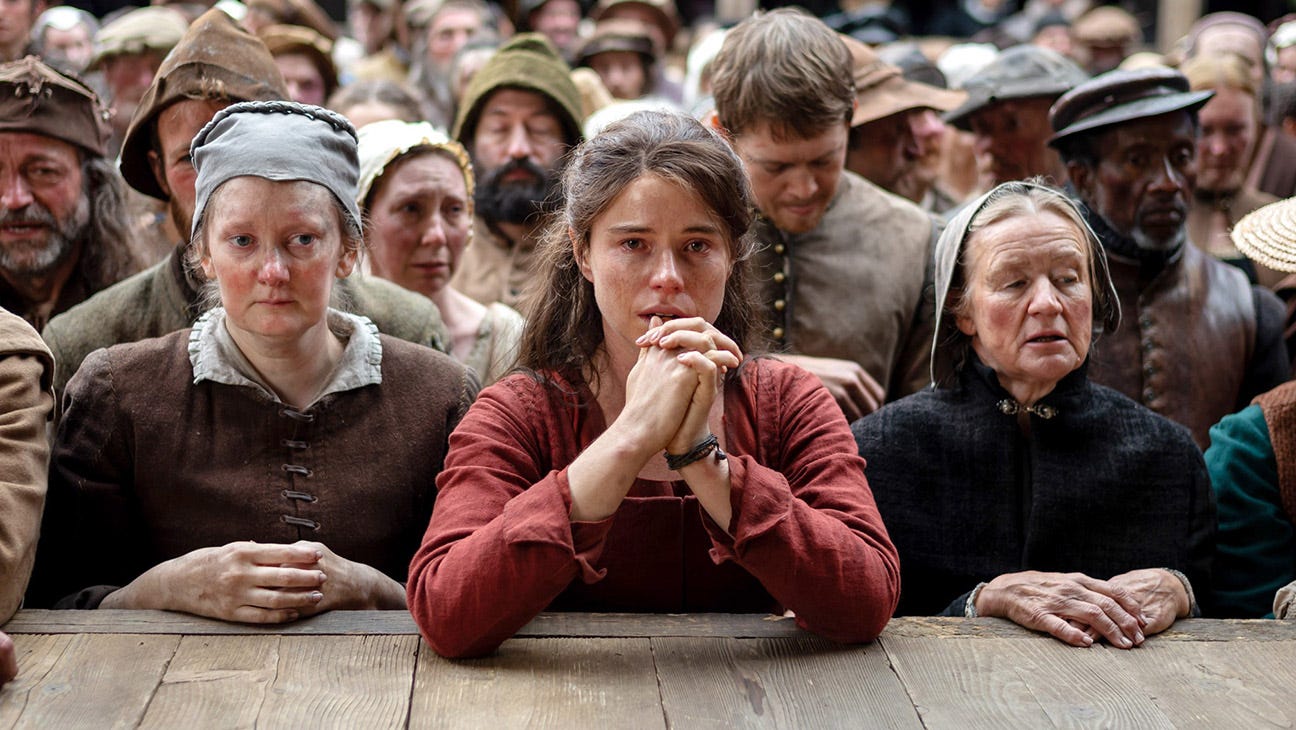
Based on Maggie O’Farrell’s 2020 novel of the same name, Hamnet reimagines the life of Shakespeare’s family in the years surrounding the death of his eleven-year-old son, Hamnet, and the writing of Hamlet. O’Farrell’s book was a commercial and critical phenomenon and Zhao’s film adaptation has landed eight Oscar noms. This film pulls all the right cathartic strings: Jessie Buckley’s performance is phenomenal; the kid playing Hamnet is excessively cute; you will cry. But Hamnet has also attracted a recurring critique: that it is manipulative, exploitative, and ultimately nothing more than grief porn.
So, let’s unpack that charge.
In November, The New Yorker asked: “Hamnet Feels Elemental, but Is It Just Highly Effective Grief Porn?” To label Hamnet grief porn is to place it alongside sensationalist news coverage of personal tragedy or the related genre of so-called ‘misery literature’, from A Child Called It to A Little Life. Such works dwell relentlessly on suffering, inviting an intense emotional response that can tip from empathy into something uncomfortably pleasurable. As Zoe Williams wryly put it in The Guardian, “Is it grief-porn or is it grief-art?” Grief-porn, she suggests, is “emotionally manipulative”, whilst grief-art implies that the film “unleashes feelings both universal and true.” Two words matter here: manipulative and true.
The first has appeared again and again in reviews of Zhao’s film. The Spectator called the film “ruthlessly manipulative”, whilst The Independent dismissed it as “artificial and manipulative Shakespeare fan fiction”. What is framed as an aesthetic objection often functions as a moral verdict. The language of the “artificial” presumes the existence of a truer, purer form of feeling against which the artwork is judged — and found suspect.
Yet “artificial” and “art” share a root. Both derive from the Latin ars, meaning art, skill, or craft. In Shakespeare’s day, art was frequently set against nature or truth as both philosophers and writers meditated on how closely art might imitate life. Philip Sidney, a knight and sonneteer who inspired Shakespeare, argued in the 1580s that poetry did not merely imitate the world but remade it:
[Poetry] doth grow in effect into another nature: in making things either better than nature bringeth forth, or quite anew, forms such as never were in nature… Nature never set forth the earth in so rich a Tapestry as diverse Poets have done, neither with such pleasant rivers, fruitful trees, sweet smelling flowers, nor whatsoever else may make the too much loved earth more lovely: her world is brazen, the Poets only deliver a golden.
For Sidney, art is artificial in the best sense. It’s shaped, skilled, and deliberately elevated. It does not simply copy the world but works upon it to reveal something better. Nature, he suggests, is already loved, but poetry makes it more brilliant — turning the brazen world golden. That metaphor mattered in an age that took alchemy seriously, when artifice was understood as the skilled labour by which base matter might be transformed into pure gold.
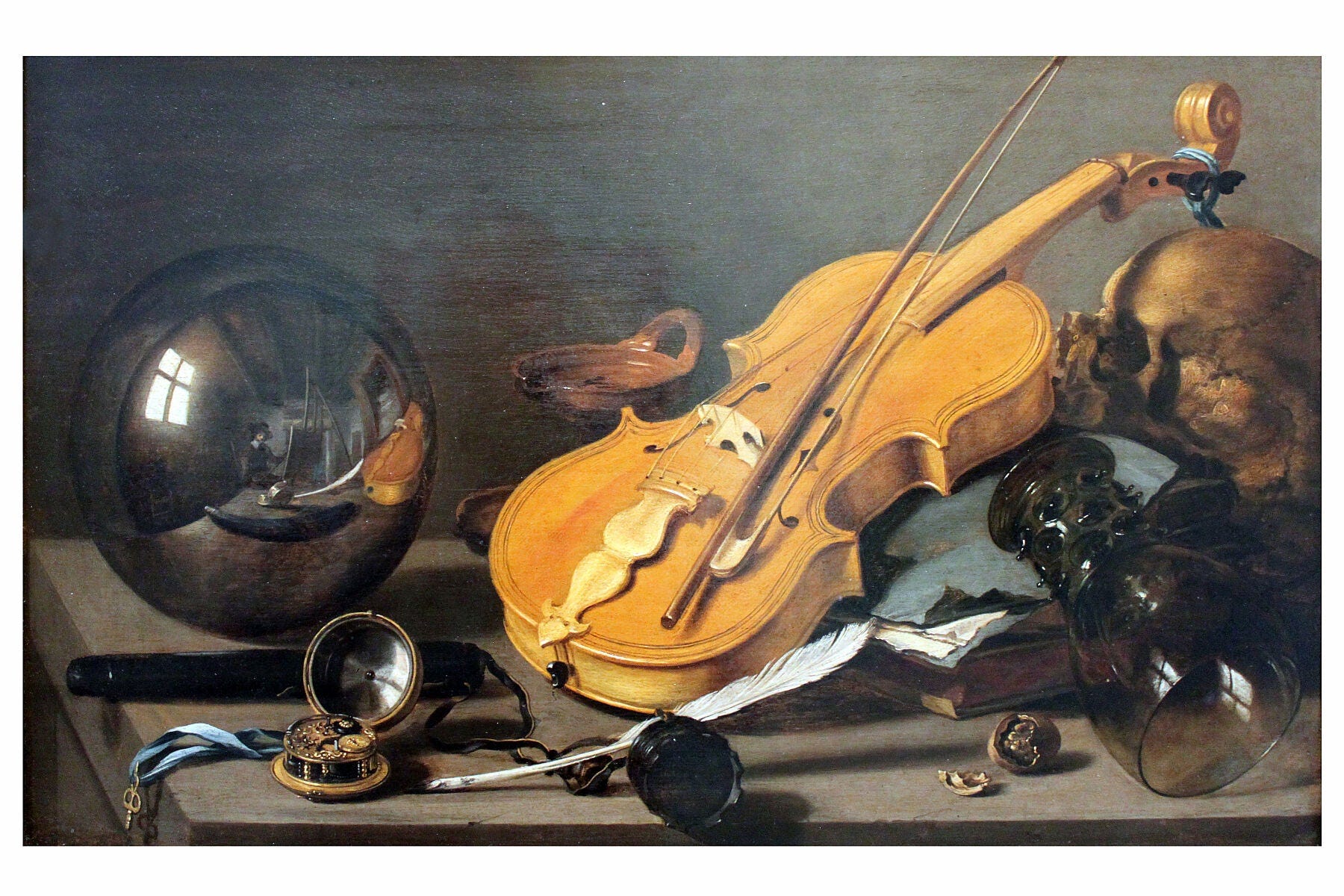
This idea extends naturally to the theatre. When Hamlet instructs the visiting players in Shakespeare’s actual play, he famously warns them against “o’erdoing” their emotions, reminding them that the purpose of playing “was and is, to hold, as ’twere, the mirror up to nature”. Hamlet wants restraint, not excess. Grief, rage, and despair should resemble the world as it is experienced, not as it is melodramatically exaggerated. Art, here, earns its legitimacy by its closeness to life.
And yet this closeness has always been treated as suspect.
Plato notoriously called poets liars. He banished them from his ideal society in Republic as imitators who choose illusion over reality and emotional manipulation over rational thought. In Shakespeare’s England, this anxiety fuelled a broader anti-theatrical movement, often driven by Puritan moralists, who attacked the stage as a site of deception, disorder, and moral contagion. One such moralist, Philip Stubbes, writing in 1583, offered a breathless catalogue of theatrical sins:
[In tragedies] the Persons or Actors, are Gods, Goddesses, Furies, Fiends, Hags, Kings, Queens…[in comedies] the Persons or actors are whores, queens, bawds, scullions, Knaves, Courtesans, lecherous old men, amorous young men, with such like of infinite variety…if you will learn falsehood, if you will learn cosenage. If you will learn to deceive, you will learn to play the Hypocrite: to cog, lie and falsify. …all these good Examples, may you see painted before your eyes in interludes and plays.
Stubbes’s fears are tangled with anxieties about social mobility and authority — if anyone can play a king, what becomes of monarchy? — but at their core lies a simpler claim: art lies. Against a God-given natural world, with its real love and real grief, theatrical representations appear dangerously counterfeit.
This tension between art and nature is one of the most explicit motifs in Hamnet. The film’s opening act unfolds as a kind of pastoral romance. Zhao lingers on the lush English countryside — woodlands, great oaks, shafts of light breaking through leaves — with a visual intensity that borders on excess. This world feels elemental and alive. It stands in sharp contrast to the man-made spaces of town and household, a distinction most clearly staged through the film’s two birth scenes: one a raw, almost feral labour set against woodland silence, the other communal but claustrophobic, unfolding within the cramped walls of a Tudor home.
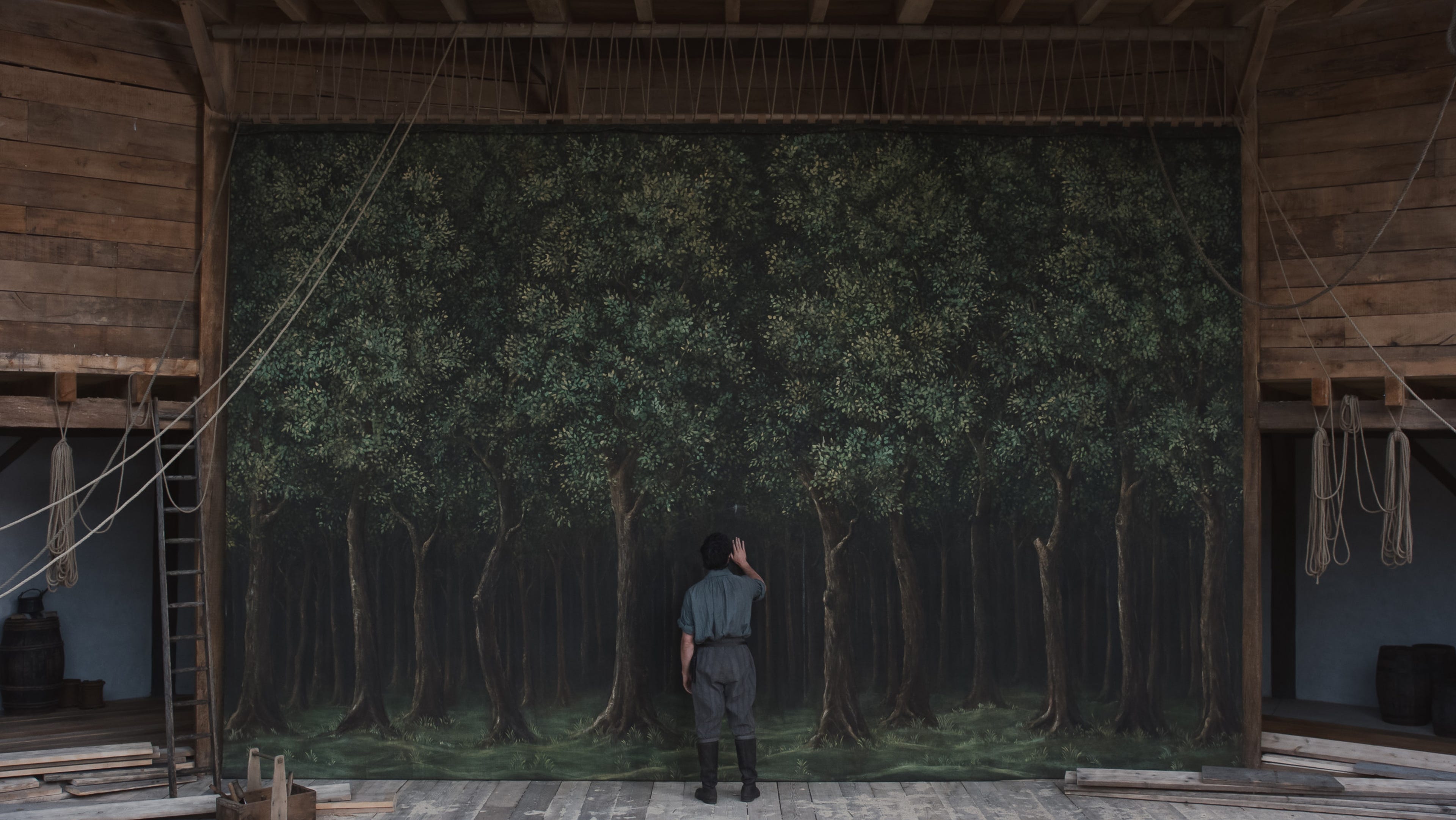
The film’s meditation on artifice becomes most explicit when we finally arrive at the theatre. After more than an hour immersed in the splendour, unpredictability, and violence of the natural world, we see the Globe’s yard filled with carpenters hauling in tree trunks to be carved into scenery. Painted trees form the backdrop and papery leaves are tied to branches with string. Ropes and pulleys hang in plain sight. Before our eyes, theatre’s attempt to replicate the natural world is exposed as man-made illusion.
Moments like this invite a sort of satisfaction of seeing the mechanism, of recognising the strings. There is a temptation to feel smug and to congratulate ourselves for seeing through the trick. But that impulse often carries a moral edge. To accuse Hamnet of exploitation is to revive an old suspicion of art that makes us feel too much. It is to imply that grief, once shaped and staged, becomes dishonest and that true sorrow belongs only to lived experience, not to crafted representation.
In that sense, the charge of “grief porn” echoes Stubbes more than it might care to admit. Never trust poets; they lie. And yet, as Sidney and Shakespeare alike insist, it is precisely through artifice that art can approach something like emotional truth. The question Hamnet ultimately raises is not whether it manipulates us. All art does. The harder, more uncomfortable question is why we remain so wary of being moved.
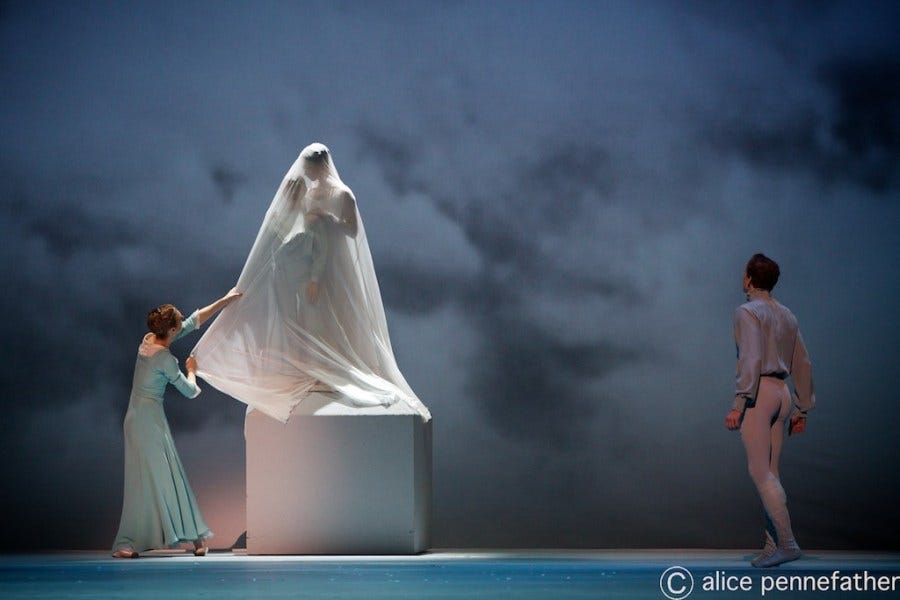
In Zhao’s Hamnet, the play Hamlet stands in best as a representation of capital A Art (I mean, does anyone actually cry at the end of Hamlet). A better Shakespearean analogue for Hamnet and the grief inflicted by the loss of a child is The Winter’s Tale. In its opening act, King Leontes destroys his own happiness, losing both wife, Hermione, and their son in a cascade of jealousy and grief. Like Zhao’s Hamnet, The Winter’s Tale explores grief in three stages: joy, tragedy, and reconciliation. This final act is staged through one of Shakespeare’s most self-conscious acts of theatrical magic. In the final scene, Hermione appears on stage as a crafted statue that then comes to life. This resurrection is not presented as realism but as art. Confronted with something that moves him beyond measure, Leontes does not ask whether it is manipulative or false. He asks only that it be permitted: “If this be magic, let it be an art / Lawful as eating.” What matters is not whether the feeling is produced by craft, but whether that craft truly enables life to be lived again. Hermione’s resurrection is ultimately a metaphor for the restorative, healing powers of art, made literal when the beloved comes back to life.
Hamnet works in a similar register. It does not claim to reproduce grief exactly as it is experienced, nor does it pretend that art can undo death. Instead, like the statue in The Winter’s Tale, it offers a shaped, crafted encounter with loss — one that acknowledges its own mechanisms even as it asks to be felt. To dismiss this as exploitation is to repeat an old error: to confuse artifice with deceit, and intensity with dishonesty. Shakespeare knew better. Sometimes the only way to approach grief is through something made, musical, and deliberately unreal.
That said, if you want a Winter’s Tale-esque moment of restoration after the intense cathartic finish of Hamnet, you can watch the cast dance to ‘We Found Love’. A nod to the Renaissance jig? Maybe. In a parallel universe, this played over the credits.
This is a fabulous read. I had read all the articles in the Guardian and the Independent about labelling something grief porn and I almost felt a visceral anger towards their comments. Of course we are meant to be upset, it's a film about grief. And when I was crying and watching it, I thought thank goodness someone shows that its okay to be consumed by grief.
Such an interesting read!!